
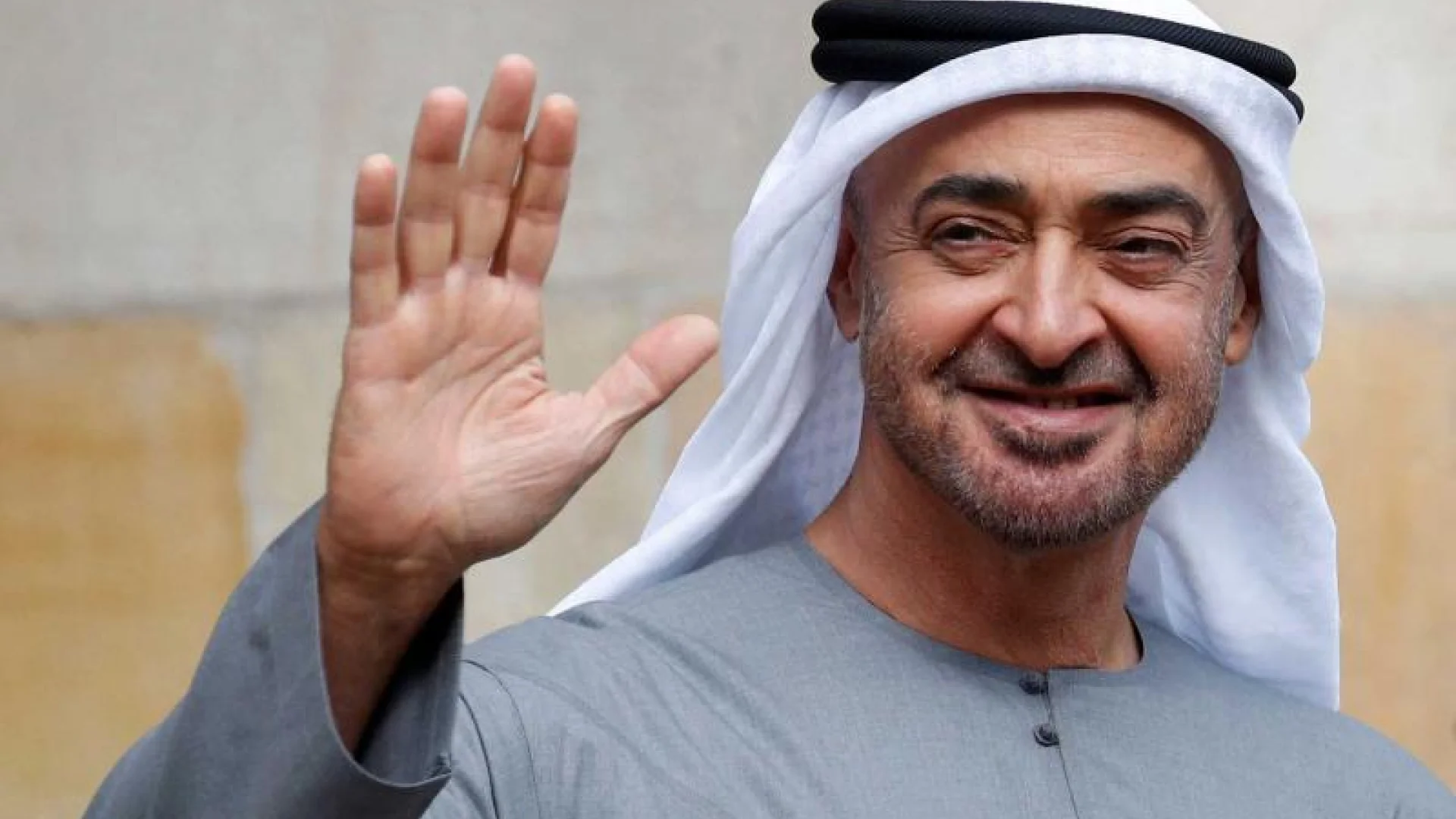
March 11 lands differently in Abu Dhabi: it’s the birthday of Mohamed bin Zayed Al Nahyan, born in 1961—known globally as MBZ—who has served as the third President of the United Arab Emirates and the Ruler of Abu Dhabi since 2022. His leadership is often read in the city’s tempo: calm on the surface, ambitious underneath, with long-term bets on infrastructure, industry, technology, and global connectivity. Walk the Corniche at dusk or step into a new mixed-use district and you feel policy translated into space—shade, glass, roads, museums, homes. This is a birthday that doubles as a lens on how modern Abu Dhabi sees itself: steady, strategic, and built to last.
The morning air is unexpectedly gentle, the kind that makes the Gulf feel like a secret before the sun turns up the volume. A hotel lobby on the Corniche smells of cardamom and polished stone. Outside, the sea lies flat, metallic, almost unreal. A security guard gives a small nod as a line of black SUVs glides past—silent, disciplined, like punctuation in motion.
At the coffee counter, the barista sets down a tiny cup with a careful hand. “Today,” he says, lowering his voice as if the day itself could hear him, “is special.” He doesn’t need to explain. In Abu Dhabi, dates carry meaning the way buildings carry shadows. March 11. The birthday of Mohamed bin Zayed Al Nahyan, born 11 March 1961, widely known as MBZ—the third President of the United Arab Emirates and the Ruler of Abu Dhabi since 2022.
It’s not a holiday in the loud, confetti sense. The city doesn’t erupt. It aligns. Conversations tilt, subtly, toward the idea of leadership—what it looks like, how it feels, how it changes a skyline without raising its voice.
Abu Dhabi is a city of composure. Even its drama is controlled—high-rise silhouettes drawn with a ruler, boulevards that run straight as decisions, palm trees planted with the precision of a blueprint. In many places, leadership would announce itself with spectacle. Here, it tends to appear as continuity: projects that don’t stop, systems that keep improving, a sense that the long view is not a slogan but a habit.
A taxi driver swings onto a bridge toward Saadiyat Island and gestures with his chin at the horizon. “Dubai is fast,” he says. “Abu Dhabi is…,” he pauses, searching for the word, “…certain.” Then he adds, almost proudly, “And quiet.”
That quiet isn’t emptiness. It’s deliberate. And it’s part of how many residents and investors read the capital: stable surface, strategic depth.
On days like March 11, Abu Dhabi feels like a living diagram. Not because people are reciting speeches, but because the place itself is a reminder of priorities: infrastructure that keeps widening, cultural landmarks that anchor global attention, districts designed to attract companies, talent, families.
Step into a newly opened mixed-use area and you can hear the city’s new language: English and Arabic on the same glossy signage, a concierge greeting a family with shopping bags, a business traveler asking for a meeting room “for ten, with video.” In the elevator, someone glances at their phone and says, “We’ll be in Riyadh by lunch.” The region feels close, interconnected, a network rather than a map.
MBZ’s formal role since 2022—UAE President and Abu Dhabi’s ruler—sits at the top of a structure built for long-term execution. In the Emirates, leadership and development don’t just influence each other; they often move as one. The result is a city where big decisions show up in ordinary moments: a smoother commute, a new school campus, a waterfront promenade where the lighting feels designed for people, not just photographs.
In a museum café, a visitor leans over her phone, eyes bright with the kind of disbelief reserved for places that seem to have been planned on a different scale. “It’s incredible how much is happening,” she says, “and how orderly it feels.” Orderly. That word returns again and again in Abu Dhabi—spoken by residents, contractors, teachers, entrepreneurs. It’s a form of comfort. It’s also, quietly, a competitive advantage.
Later, near a kiosk by the water, an older man buys a bottle of water and notices a small flag by the entrance. He catches your glance and nods. “March eleven,” he says, like a greeting. “He keeps the ship steady.”
The metaphor lands because it matches the atmosphere: a ship moving through warm waters, but always aware of currents. In a region where headlines can change quickly, steadiness becomes a currency. And currency attracts capital—especially the kind that wants to build, not just trade.
To remember that MBZ was born in 1961 is to remember how quickly this coastline has transformed. Abu Dhabi’s modern identity is not the product of slow drift; it’s the result of concentrated intent. The city has expanded from a smaller Gulf settlement into a global capital with museums, industrial strategies, and a skyline that looks like it was sketched by an engineer with artistic patience.
Since becoming President in 2022, MBZ’s leadership is often associated—by supporters and observers alike—with a focus on resilience: economic diversification, international partnerships, and the building blocks of a post-oil era. The story isn’t one single project. It’s a pattern: infrastructure, institutions, and investment frameworks designed to keep momentum even when the global mood shifts.
You can feel that pattern in the way Abu Dhabi grows: not only upward, but outward—new communities, new road links, new public spaces. Families picnic on the grass when the heat eases. Joggers loop the Corniche at sunset. In the distance, cranes stand like long-armed timekeepers, counting down to the next handover.
For real estate investors, March 11 is less about ceremony and more about reading the continuity signal. Under MBZ, Abu Dhabi—and the UAE more broadly—has reinforced a model in which governance, sovereign capital, infrastructure delivery, and regulatory evolution are tightly linked. In practical terms, property performance is often shaped by policy execution: where jobs are created, where transport is upgraded, where lifestyle assets (culture, waterfronts, campuses) are concentrated.
1) Demand drivers: talent, households, and corporate gravity
As Abu Dhabi continues to attract international professionals in technology, industry, energy transition, healthcare, and education, housing demand increasingly favors well-connected, service-rich neighborhoods. Investors should watch not only headline population growth, but composition: families need schools and larger layouts; high-earning mobile professionals often prefer prime apartments, branded residences, or serviced living near business nodes.
2) Quality and operating costs matter more than ever
The market is maturing. Tenants and buyers compare buildings with a sharper eye: insulation and cooling efficiency, shade and orientation, amenities that actually get used, and predictable service charges. Properties that manage heat and lifestyle intelligently tend to outperform on occupancy and rent resilience—especially as new supply competes on design and finish.
3) Infrastructure is the quiet multiplier
In the UAE, infrastructure can re-rate entire micro-markets. New road links, public realm upgrades, and cultural anchors change how long a commute feels—not just how long it is. Investors who track delivery timelines can identify the window between “credible construction” and “fully priced-in,” when rents and capital values often adjust upward.
4) Portfolio positioning: Abu Dhabi versus Dubai
Many global buyers treat Dubai as the high-liquidity, high-velocity market—and Abu Dhabi as the steadier counterweight: fewer spikes, more selective growth, often tied to government-led planning and institutional demand. The opportunity is to focus on submarkets with deep end-user appeal and proven transaction volume, rather than relying on broad citywide averages.
5) Practical strategy
For 2026–2027 horizons, three filters can improve risk-adjusted outcomes: (a) proximity to employment and education clusters, (b) building efficiency and service-charge sustainability, (c) exit liquidity—how easily the asset can be resold. Active asset management is increasingly decisive: furnishing strategies, tenant experience, unit upgrades, and clear positioning against competing launches.
Ultimately, the relevance of MBZ’s birthday to real estate is symbolic in the best way: it points back to the leadership framework that makes long-term planning believable. And in Abu Dhabi, believability is value—translated into neighborhoods, rents, and the confidence to build for the next decade, not just the next cycle.